
Trump’s Tariffs and the Irish Home Buyer: A Closer Look at Our Own “Tariffs” on New Housing
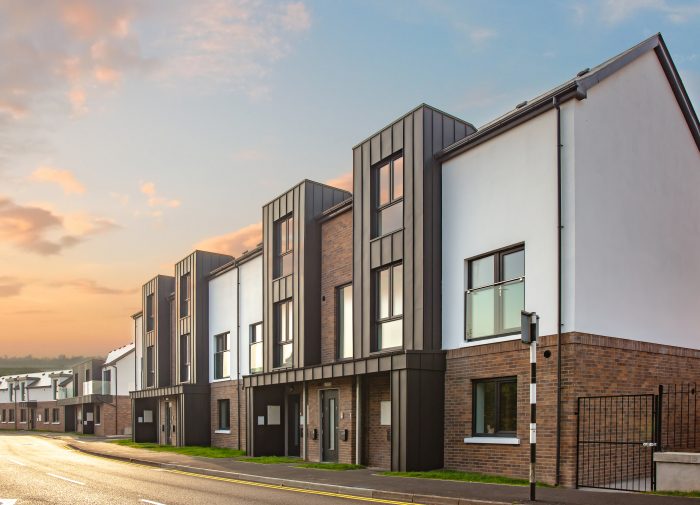
We recently had a conversation with a client in the banking sector who explained to me the difference between potential customers and dreamers. In simple terms: a dreamer is someone who aspires to purchase a product but cannot afford it. They only become a potential customer if the product can be delivered within their financial reach.
This concept sparked a broader discussion on tariffs particularly those associated with the well-publicised trade policies emerging from the US under President Trump. The introduction of such tariffs inevitably inflates the cost of goods, pushing even current and potential customers into the realm of dreamers. In this scenario, Irish exporters would undoubtedly face significant challenges.
It was notable that this risk was acknowledged by the Tánaiste in an official statement issued on 2nd April 2025 (https://www.gov.ie/en/department-of-foreign-affairs/press-releases/statement-from-the-t%c3%a1naiste-on-us-announcement-on-tariffs/):
The statement included a comment “I must be honest tonight that a 20 per cent blanket tariff on goods from all EU countries could have a significant effect on Irish investment and the wider economy and the impact of what has been announced is likely to be felt for some time.”
Similar sentiments have been issued by the Taoiseach in a more recent statement (https://www.gov.ie/en/department-of-the-taoiseach/press-releases/statement-from-taoiseach-miche%C3%A1l-martin-on-tariffs/). In this the Taoiseach states “I have always been clear in my view that tariffs are damaging to all sides – those imposing them, those on the receiving end and, most importantly, to businesses and consumers.”
What strikes me as surprising, however, is the relative lack of discourse around the domestic tariffs effectively imposed on new housing in Ireland and the profound impact these have, particularly on first-time buyers. Could it be that our current taxation and regulatory frameworks are themselves contributing to the creation of a generation of dreamers, rather than active purchasers of new homes? Are Our Tarrifs working.
This question became particularly relevant to me this week, as I finalised a detailed feasibility study for a proposed apartment development in the Greater Dublin Region. The study drew upon data from over 150 projects we have worked on since the beginning of this year across our group of companies (OCFPM, RDF Architects & Planning and DNCF Building & Civil Solutions Ltd)
As part of this analysis, We sought to quantify the direct tariffs imposed on new housing defined here as taxes, levies, or mandatory charges applied directly to the development process. This analysis excludes general corporate tax, PAYE, PRSI, and other indirect taxes.
In practice, these direct tariffs often lead to a tax-on-tax effect. For example, Contributions and levies must be paid upfront, attracting financing costs. Sales costs, contingencies, margins, and related items are typically calculated as a percentage of overall project costs, and are therefore in turn added. Finally, VAT applies to these costs, in the context of vat on the final sale of the unit, further compounding the financial burden, thus charging the vat on the contribution. In effect a tax on a tax.
Below is a summary of the direct tariffs applicable to a current scheme of 60-70 apartments (predominantly 1- and 2-bed units) that formed the basis of our assessment
Local Authority CN Fees, Bond, Licences €2,893
ESB & Utility Enablement (incl. Quotable Charges)* €21,018
Local Authority Contributions €39,709
Part V Obligations** €12,853
Stamp Duty (land and purchaser’s costs)*** €6,500
VAT on Other Costs (excl. above) €65,801
Total €148,774
(*Estimated allowance for quotable charges, **See previous LinkedIn post regarding Part V, *** Includes land purchase stamp duty and End purchaser stamp duty, Above doesnt allow for the RZLT and for levies including derelict sites costs, defective concrete products levy which can be applicable to other schemes and exacerbate the matter even more)
Regardless of how one may interpret these items, they are all ultimately a product of government taxation policy and therefore can rightly be regarded as tariffs on new housing. In this particular project, these direct tariffs amount to €148,774 per apartment.
Across a range of projects we have assessed this year, the pattern is consistent:
These tariffs represent often approximately 25% of the final purchase price of a typical apartment.
Or, equivalently, they can add up to 33% to the direct project costs or minimum feasible sales price
This naturally raises an important question at a time when there are 40,000 units in Dublin with planning that are not progressing (with viability being a significant aspect):
If the Irish Government is rightly concerned about the economic consequences of Trump’s proposed tariffs on EU goods, why is there so little public discussion about the 33% “tariff” already being applied to first-time home buyers in Ireland’s new housing market?
As professionals in Architecture, Quantity Surveying, Engineering, and development, we must recognise that such structural costs are not merely theoretical they are making home ownership unattainable for many would-be buyers, turning potential customers into yet more dreamers.
It is time for an open and honest conversation about the cumulative impact of our domestic housing tariffs and how they may be quietly exacerbating Ireland’s housing crisis.
Donal Fitzgerald BE C Eng MIEI & Jonathan Marais (RDF Architects & Planning)